|

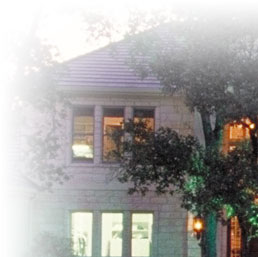 from the AUSTIN AMERICAN STATESMAN - Sunday, July 13, 1997 from the AUSTIN AMERICAN STATESMAN - Sunday, July 13, 1997
From the street, the home looks reminiscent of an architectural style popular in the 1900s,but on the inside it incorporates numerous energy saving features that are cutting edge. This home, built by Katz Builders, Inc. is one of the seven luxury homes that will be featured in the Texas Capitol Area Builders Association (TxCABA) Parade of Homes that opens next weekend in The Uplands.
While the exterior styling of the Katz home is one-of-a-kind, the energy features are representative of the attention to green building exhibited by all the builders in this year's Parade of Homes. All the homes have light exteriors to reflect the sun's heat, they were built with durable materials and a lot of them have radiant barriers in the attic. The "green home" by Katz was designed by Barley and Pfieffer Architects. This home represents first time green building has been showcased to such an extent in the Parade of Homes.
Green building is a five-year-old, first-in-the-nation, City of Austin program for environmentally friendly building, explains Mary McLeod, residential specialist with the City of Austin Green Building Program. Among its aims is encouraging the kind of home and business construction that provides "Conform, better health, lower utility bills and lower maintenance to consumers," McLeod says.
McLeod praises the many Austin firms incorporating green building techniques. Recent national recognition of the city's program includes two Colorado programs modeled after Austin's and a public television documentary highlighting the Katz/Barley and Pfieffer home that will air in the fall.
Peter Pfieffer, AIA, explains in several ways the inherent coolness of the 3,700-square foot, two-story house built for the Parade of Homes. First, and particularly crucial, was the sites election. He and Katz carefully chose the half-acre lot at the crest of the small hill in the subdivision off Bee Caves Road as the one that best catches the prevailing southeasterly breezes.
Second was design. The architects incorporated the following passive solar features and green building techniques into the home.
Three-foot overhangs that reduce summer's irritating glare; their stained green braces serve as decoration.
Hardi-Plank, a cement-based siding known as durable, maintenance-free and cheaper than brick and wood.
Radiant barriers in the attic that reflect unwanted solar heat.
Wrapping the exterior wall sheathing in a building felt that keeps moisture and humidity out of the walls.
Composition roof shingles of a light color in a high grade.
Concrete floor on the living areas of the downstairs that is scored in two- foot diamonds; hard-surface flooring offers healthier living than does carpet.
Double pane windows with 'Low E' glazing that keeps summer heat out and winter heat in.
Operable windows (even high up in the stairwell and living and family rooms) ceiling fans that enhance natural ventilation.
Recycling cabinet in the kitchen.
Low maintenance buffalo grass as landscaping on the half acre lot.
Based on these and other design features, Pfieffer estimates an average of $120 to $135 a month for the home's utility bills. "This home's really 'green' features can be repeated in other homes in any given area," he believes.
Pfieffer maintains the real problem in Austin is not just the heat, but the humidity associated with it. Likewise, the amount of insulation is less crucial than is coping with the humidity. Using a house wrap with a felt paper base created a barrier to keep the outside humidity out of this parade home, he says. "Since on a good 95 percent of the days here, it's mere humid outside than you want it to be inside, we created a very thorough vapor retarded around the house," he says.
The air conditioning system also works against Austin's humidity by providing a slight positive pressure with reduces the chance or humid air from the outside to infiltrate the home's interior. The system has a SEER (seasonal energy efficiency rating) of 13.5; the national standard is 10.0.
The home sold for $470,000 not including the construction of a 25 foot pool, to an out-of-state high tech engineer with two young children. The family represents exactly the kind of client the builder and architects envisioned, adds Lucy Katz, Joel's wife and the firm's customer relations specialist. Yet the home suits an empty-nester, too, for the major living areas are down-stairs.
Joel Katz commends green building because it saves natural resources, deals gently with the environment, and highly regards health issues. Concerning the former, optimum value engineering framing was employed throughout the house. This means that metal clips were used in place of lumber in some cases. And when the structure called for large beam, the builder installed glue laminated products. Glued wood rather than solid wood not only offers stronger support, Katz says, but is more cost effective.
Katz is also pleased about the air conditioning's installation. Because the attic is insulated with a radiant barrier and is well ventilated, it's not excruciatingly hot up there. These two features work together to keep the whole house cool and energy efficient. furthermore, if down the road several years the system needs maintenance, the repairman will bless Katz because he'll have room to work on it. Lucy Katz proudly says all her husband's homes incorporate design features that are helpful in emergencies.
For example, in the home's planning sessions, the Katzes and architects strove to make the home wheelchair accessible. Consequently, the kitchen boasts two sinks, one of them in the island, and a raised dishwasher. Both amenities allow kitchen work and maneuverability by someone in a wheelchair. Similarly, the laundry room's dryer rests on a raised platform.
Pfeiffer points out that access to the refrigerator by a member of the family will not delay another family member's work time or encroach on the cook's workspace. Why did he position the refrigerator as close as possible to the family room and the backyard patio door? "Because I remember growing up with six brothers and sisters and having to cross in front of my mother to get to ours," Pfeiffer laughs.
Other design features in the four-bedroom, three-bath home are niches and shelves for collectibles and art, nine-foot ceilings, an Isokern fireplace, a seat in the master shower, a closet for hand linens like tablecloths and positioning the kids' playroom on the second level diagonally opposite from the ground level master bedroom "for acoustic privacy," the architects note.
"This home looks good and feels good. It's not a drain on the energy resources of the planet," Pfeiffer adds. "Who says you can't live luxuriously and responsibly at the same time?"
McLeod maintains green building possibilities abound. The most important however, "is having the right design for your lot; the rest is icing on the case. "An easy "green" choice concerns paints. Choosing one with a lower VOC (volatile organic compounds) content means fewer fumes. Another environmentally-friendly choice is cooling equipment with a 12.0 SEER rating. The City of Austin "gives you a rebate if you put in one at 12 or higher," McLeod says. "Over the long term, there's a considerable savings to the consumer when the higher-rated equipment is used."
While Joel Katz agrees with McLeod and Pfieffer that green building is "a move of the future," he believes the public first must be educated about its benefits and then once so informed,"consumer preference will drive it." Primary in everybody's mind is cost. "A little more in the short run," Katz answers. "But less in the long run."
All this week Hayden Bend at The Uplands in the Village of Bee Cave will be alive with construction activity as the seven custom builders ready their homes for the July 19 opening of the 41st annual TxCABA Parade of Homes.
Seven fully decorated homes, furnished and landscaped, priced at $400,000 and up, will open to the public on July 19 for a two-week run through August 3, 1997.
The Uplands, a Bee Caves Investors project on Bee Caves Road the intersection of U.S. 71, is a planned subdivision of 165 homesites on half-acre to three- acre sites in the Lake Travis Independent School District. The community is adjacent to 4,000 acres of bird preserve in the rolling hills west of Austin and West Lake Hills. |